
The Strenghts and Weaknesses of Njaba LGA (Umuaka Times Editorial).
3 min read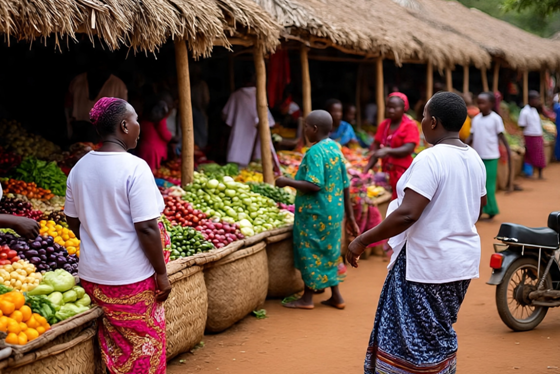
The economy of local governments in Imo State reflects a broader pattern of rural productivity, resource dependence, and structural challenges that define much of Nigeria’s subnational economy. At the grassroots level, Local Government Areas (LGAs) are designed to serve as engines of development—responsible for primary healthcare, rural infrastructure, markets, and community services. However, their economic strength varies widely depending on natural resources, population density, and proximity to urban or industrial centers.

Imo State’s economy is a mix of agriculture, trade, and extractive industries, particularly crude oil and natural gas. The presence of over 160 oil wells across the state has made some LGAs—such as Ohaji/Egbema and Oguta—economically prominent due to oil revenues and industrial activity. Yet, most LGAs do not benefit directly from oil wealth. Instead, they rely heavily on: Agriculture (cassava, yam, palm produce), local markets and petty trade as well as federal allocations and limited internally generated revenue (IGR).
These grassroots economies are largely informal and subsistence-driven. While the state government has promoted decentralized industrialization and agro-processing zones, many rural LGAs still operate with limited infrastructure and investment. Njaba presents a clear example of a predominantly rural local economy. With a land area of about 84 square kilometres and a population estimated at over 200,000 people, Njaba is characterized by dense rural settlements and strong communal ties.
The economy of Njaba is overwhelmingly agrarian. The fertile rainforest soil supports the cultivation of yam tubers, cassava tubers, maize and cocoyam. This has made farming in Njaba mostly small-scale and subsistence-based, with surplus produce sold in local markets. This type of agricultural focus not only sustains livelihoods but also reinforces traditional land-use systems and family-based production in the locality.
Beyond farming, Njaba’s economy includes petty trading in rural markets, artisanal crafts and small-scale production, transportation services within and between communities. These activities form the informal sector, which dominates economic life but often escapes formal taxation, limiting the LGA’s revenue base.
Njaba is traversed by the Njaba River and is rich in cultural heritage, including traditional shrines and festivals. While these features hold potential for tourism, they remain largely underdeveloped economically.
Like many LGAs in Imo State, Njaba faces low internally generated revenue (IGR), heavy dependence on federal allocations and limited industrial or commercial investments. Sadly, these developments restrict its ability to fund infrastructure, education, and healthcare at the local level. Rural roads, electricity, and water supply are often inadequate, limiting access to markets and discouraging investment. While agriculture is vital, its subsistence nature means low productivity and vulnerability to climate and market fluctuations.
Although LGAs are constitutionally empowered, their financial autonomy is often constrained, affecting service delivery and development outcomes.
Unlike oil-rich LGAs, Njaba lacks large-scale industries, reducing employment opportunities and economic diversification. Despite these challenges, Njaba has significant growth potential such as agro-processing industries: Adding value to cassava and palm produce could boost income and employment. Rural industrialization policies: State initiatives like energy zones could eventually extend benefits to inland LGAs. Cultural festivals and natural features could attract investment if properly harnessed. Strengthening revenue collection and transparency could enhance development capacity.
The economy of local governments in Imo State is a tale of contrasts between oil-rich, revenue-generating LGAs and predominantly agrarian ones like Njaba. Njaba exemplifies the strengths and limitations of rural economies in Nigeria: rich in human and natural resources, yet constrained by structural and institutional challenges.
For Njaba to transition from subsistence to sustainable growth, deliberate investment in agriculture, infrastructure, and local enterprise development is essential. Ultimately, the transformation of LGAs like Njaba will play a decisive role in shaping the broader economic future of Imo State. All these things will happen only if the people, especially the leaders of the local council become more responsible and responsive to the people.