
Ebonyians jubilate as state assembly passes bill to regulate scrap trade, house rents and estate agent fees.
3 min read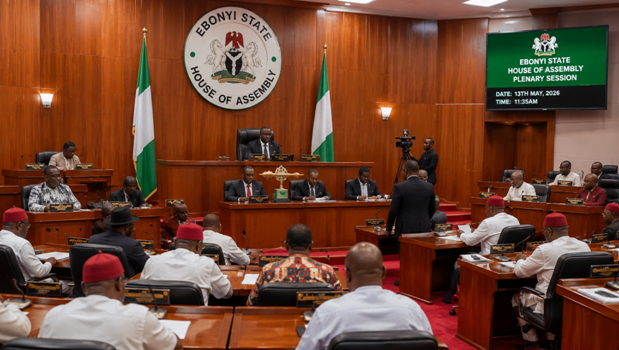
If what Umuaka Times gathered last week from Ebonyi State is anything to go by is anything to go by, residents, particularly students, traders, business owners, workers and other urban dwellers in Ebonyi State, are expressing optimism following the passage of a bill by the Ebonyi State House of Assembly seeking to regulate scrap trading, house rents and estate agency fees across the state.

The legislation, titled “Ebonyi State Sale of Scraps, House Rent and Agent Fees Regulation Law, 2026,” was passed during plenary presided over by the Speaker of the House, Moses Odunwa. The bill is expected to become operational upon assent by the Governor of the state, Francis Nwifuru.

If signed into law, the legislation will regulate the sale, purchase, possession, transportation and disposal of metal and electrical scraps, while also introducing measures to standardize rents and curb what lawmakers described as excessive charges by estate agents from tenents.
Under the proposed law, the purchase, sale, possession for sale, transportation or disposal of metal and electrical scraps would be restricted to licensed dealers operating in accordance with regulations established under the legislation. Anyone found guilty of violating the provisions could face up to two years’ imprisonment or a fine of up to N500,000.
Some residents who spoke with Umuaka Times welcomed the initiative, particularly its provisions targeting scrap theft. They said the regulation had become necessary because of persistent incidents of theft of building materials, electrical installations and other metal components from construction sites and public infrastructure.
Some residents alleged that individuals popularly referred to as “ndiaboki” were among those involved in scrap-related activities with their local collaborators in some cases. Umuaka Times last week noted that such allegations should be treated on an individual basis and not as a general description of an ethnic or occupational group.
The legislation also contains provisions aimed at protecting tenants and regulating activities within the property sector. According to details made available to Umuaka Times, landlords who obtain possession of accommodation through fraud, misrepresentation or concealment of material facts would commit an offence punishable by up to two years’ imprisonment.
The proposed law would also limit estate agents’ fees to not more than two per cent of the gross sum involved in a property transaction. From the commencement of the law, landlords would be required to comply with standard rents prescribed by the governor for applicable categories of accommodation.
Estate agents operating in the state capital would also be required to register with the Ministry of Capital City, a provision intended to promote greater transparency, accountability and professionalism in property transactions.
Presenting the bill, the House Leader, Kingsley Ikoro, said the legislation was designed to address vandalism, environmental degradation and exploitative practices in the housing sector.
“This legislation is very important to us as a people because it will help check vandalism of critical assets, environmental degradation and exploitative practices in the housing sector,” Ikoro said.
Contributing to the debate, lawmakers including Victor Nwoke, Aloysius Nwodo, Oluchukwu Ezeali, Friday Ogbuewu and Celestine Ogba described the legislation as timely, particularly in view of concerns over scrap theft and arbitrary increases in house rents. Speaker Moses Odunwa also expressed concern over the activities of some scrap dealers, saying their operations had contributed to damage to public and private property.
He said effective implementation of the legislation would help improve public safety, curb vandalism and restore sanity to property transactions across the state.
The passage of the scrap, rent and estate agency regulation bill has attracted attention beyond Ebonyi, with observers suggesting that its implementation could encourage other states in the South-East to consider similar measures against vandalism, exploitative housing practices and unregulated scrap trading.
For residents, however, the effectiveness of the proposed legislation will ultimately depend on proper enforcement, transparency in licensing and the willingness of relevant government agencies to ensure that the law is applied fairly to all concerned.