Reception in Paradise for Mrs Irene Ifinibie Fannahs.
7 min read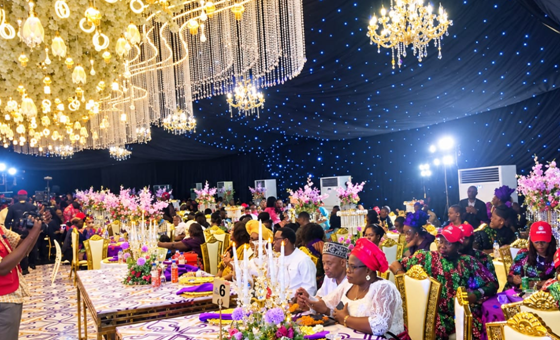
After the burial of the woman of substance and ezinne Mrs Irene Ifinibie Fannahs, Umuaka Times reporters have been thinking that if there is a reception in paradise, where the righteous are welcomed with extraordinary beauty, resplendent lights, royal splendour and the warm embrace of loved ones, then theburial reception held in honour of the late Mrs Irene Ifinibie Fannahs, née Nwulu, at National Primary School, Azumini Ndoki, Ukwa East Local Government Area of Abia State on Saturday 24 October 2026, offered a fitting earthly imagination of what such a heavenly welcome might look like for those who lived and died in Christ Jesus. In this reflection inspired by the burial reception, one could almost imagine the gates of paradise swinging open as Mrs Fannahs arrived, greeted by angels dressed in radiant garments, while the heavens shimmered with lights more magnificent than anything human hands could create. The scene on earth was already so spectacular that guests might have wondered whether they had arrived at an ordinary burial reception or stepped into a royal celebration designed for the most distinguished personalities across some parts of Igboland and the Niger Delta.

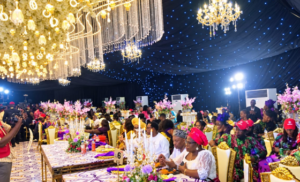
The reception venue at National Primary School, Azumini Ndoki, wore a transformation that could have competed with the grandest entertainment award ceremonies in the world. the decoration, ceiling designs, sparkling and bubbling lights, red carpet and magnificent stage combined to create an atmosphere reminiscent of the Grammy Awards or the Oscars. The hall glowed with carefully arranged lights that danced across the ceiling and reflected on the luxurious furnishings. The stage stood majestically, presenting a picture of elegance and sophistication. The red carpet added a touch of Hollywood glamour, while the overall arrangement suggested that no expense had been spared in creating an unforgettable environment for the family, friends and distinguished guests who had gathered to pay their final respects.
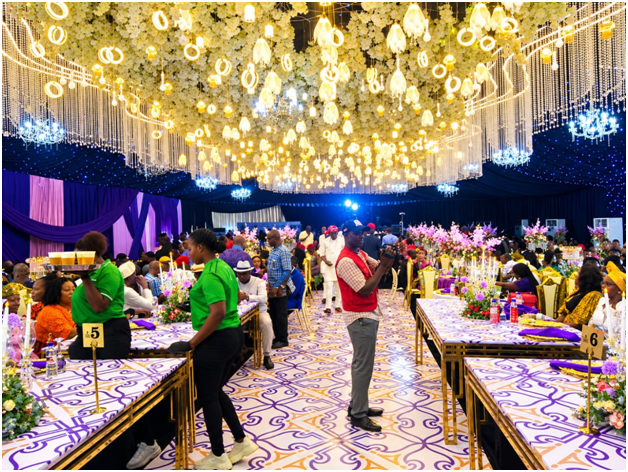

More than 14 industrial air conditioners were installed to keep the hall cool and comfortable despite the large number of guests, many of the guests still felt very cold. Gold-plated chairs, transparent glass tables and highly exotic and expensive-looking flowers added further touches of luxury to the setting. Every detail appeared carefully considered. From the entrance to the stage, the venue presented a picture of grandeur that could easily have been mistaken for the setting of a major international awards ceremony. And if paradise has a reception hall where beauty, peace and celebration meet, the Azumini venue offered a glimpse of such splendour.
The young men and women who attended to guests were themselves part of the attraction. The girls and boys providing services at the event were so striking in appearance, smartly presented and graceful in their movements that, in the playful imagination of the occasion, each could have competed in a beauty pageant at anytime and anywhere. Umuaka Times reporters drew the attention of one of the service girls and asked her, “You so much look like beauty queen.” She smiled and said thanks and left for her duty post.
The appearance and composure of the service boys and girls complemented the luxury of the venue. They moved among the guests, ensuring that visitors were attended to while contributing to the general atmosphere of class and hospitality.At the entrance, however, the mood changed from glamour to strict security. Tall, heavily built security personnel stood and watched at every move. Their imposing physiques and alert posture made it clear that access to the venue would not be taken lightly. They appeared prepared to deal with any obstruction and to ensure that the event proceeded without disruption. One of them tried to stop Umuaka Times reporters from gaining entry, except the timely intervention of Mr Okwuruora, the ace MC, it could have been another affair. Beyond the entrance, military personnel and policemen were positioned at strategic locations around the venue. Their presence reinforced the security arrangements as guests arrived, exchanged greetings and settled into the reception. The contrast was striking: elegance and celebration inside, vigilance and security outside.
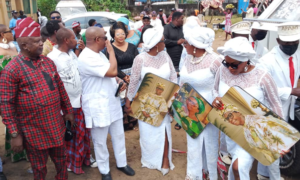
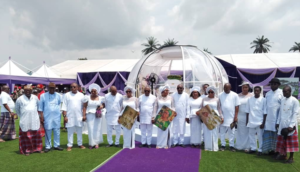
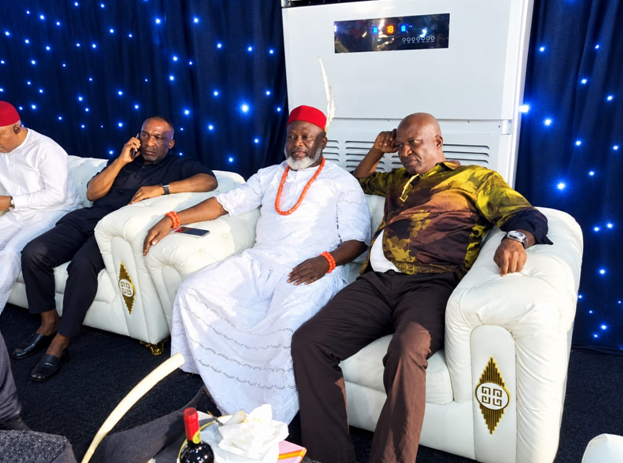
Umuaka Times can unequivocally report that the reception attracted what could aptly be described as a gathering of distinguished personalities from the Niger Delta and South-East regions of Nigeria. Royal fathers, prominent politicians, government officials, business leaders, community leaders and other influential guests converged on Azumini Ndoki to honour the memory of a woman whose family had drawn people from different walks of life. It was also a gathering where traditional authority, political influence, business success and community relationships met under one roof. Greetings and exchanges among guests reflected the many connections that had brought them together for the solemn occasion.
From Imo State, His Royal Majesty, Eze Justin Ezeala of Obinwanne, led a delegation of Obinwanne people to the event. Their presence underscored the community’s relationship with the bereaved family and its desire to stand with them during a significant family moment. His Royal Highness, Eze Vincent Ahamefule of Oboro Amurie, also led a delegation of guests from Oboro Amurie. Their arrival added another dimension to the gathering, as old acquaintances met and exchanged pleasantries. His Royal Highness, Eze Charles Nnajiemere of Amurie Omanze, led the people of AmurieOmanze to the reception. Their presence was particularly notable in the context of the family connections linking the community to the late Mrs Fannahs and her daughter, Dr Chinenye Pamela Agara, wife of Engineer. Magnus Iheanocho Agara, a High Chief and an Ambassador.
The delegations from Imo State joined other distinguished guests from Abia, Rivers and beyond, creating a gathering that reflected the strength of family ties and relationships that extend across state boundaries. In the reception in paradise imagined here, such guests might have been described as earthly representatives arriving to celebrate a life that had touched many hearts.
Hospitality was another defining feature of the reception. Guests were treated to expensive wines and champagnes, alongside well-prepared intercontinental dishes and a variety of local delicacies. The menu brought together the sophistication of international cuisine and the rich culinary traditions of the region. The spread was designed to satisfy different tastes, while the service complemented the elegant surroundings. Guests enjoyed conversations over food and drinks, reunited with old friends and shared memories of the deceased and the family. The reception provided an opportunity not only to honour Mrs Fannahs but also to strengthen relationships among people who might otherwise have remained separated by distance, work and the demands of everyday life. The atmosphere combined the solemnity of a burial with the warmth of a “family” reunion. It was a reminder that, in many African communities, a funeral is not simply an occasion for mourning; it is also a gathering where people demonstrate solidarity, preserve relationships and celebrate the life of the departed.
One of the memorable moments of the reception came when the master of ceremonies, observing the grandeur of the venue and the impressive gathering, joked that “Engineer Agara has made death look beautiful.” He further appealed to bereaved families to go ahead and hold their burials according to their financial strengths. The remark drew attention to the extraordinary arrangements surrounding the event. It captured the contrast between the pain of losing a loved one and the beauty of the reception organized to honour a woman of substance.
Of course, no decoration, expensive drink, magnificent hall or impressive guest list can remove the grief of losing a mother, grandmother, relative or friend. Death remains a painful experience for those left behind. Yet families often find ways to transform their sorrow into a dignified farewell that reflects their love, gratitude and respect for the person they have lost. In this case, the remark about Engineer Agara making death look beautiful became a humorous way of acknowledging the scale and elegance of the occasion. One could imagine that, somewhere beyond the visible world, angels smiled at the remark. Perhaps they would have responded that death itself had not become beautiful; rather, the love with which a family honoured its departed mother had made the farewell extraordinary. Imagine, for a moment, that Mrs Fannahs had reached the gates of paradise at the very moment her earthly family and friends gathered in Azumini Ndoki.
In this imagined scene, there would be no grief, no exhaustion and no tears of separation. The lights would shine without electricity, the music would need no loudspeakers, and the flowers would never wither. The welcome would be more magnificent than the finest stage, and the hospitality would surpass every earthly banquet.
The royal fathers and distinguished guests who gathered at the earthly reception would, in this picture, be replaced by a heavenly assembly whose splendour no human decoration could reproduce. The gold-plated chairs and transparent glass tables would pale beside the imagined glory of paradise. And while the master of ceremonies on earth joked about Engineer Agara making death look beautiful, the imagined heavenly host would offer a different message: that the deepest beauty lies not in the grandeur of a reception but in the love, relationships and memories that remain after a person has departed.The reception at National Primary School, Azumini Ndoki, was more than an impressive display of decoration, hospitality and security. It was an occasion that brought together family members, royal fathers, politicians, government officials, friends, associates and community delegations from different parts of Nigeria.
The presence of the Obinwanne, Oboro Amurie and Amurie Omanze delegations from Imo State illustrated the importance of kinship and community solidarity in honouring the deceased. For the bereaved family, the gathering represented support at a difficult time. For the guests, it offered an opportunity to pay their respects, renew friendships and celebrate the memory of Mrs Irene Ifinibie Fannahs. And for anyone willing to imagine a reception in paradise, the splendour of the occasion provided the inspiration for a story in which earthly elegance becomes a metaphor for heavenly welcome.