Death on the Highways: (Why Road Accidents Continue to Kill Thousands of Nigerians Every Year).
4 min read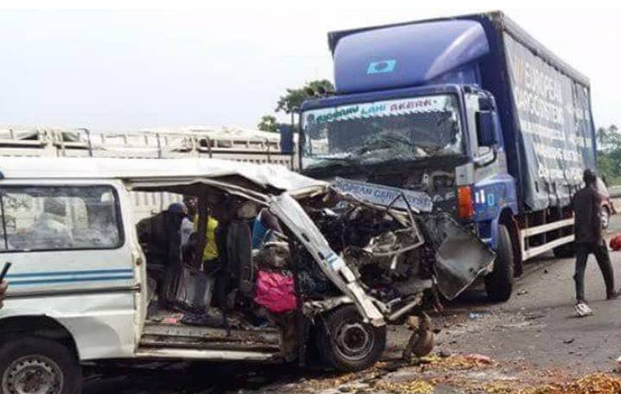
Every day across Nigeria, families begin journeys expecting to reunite with loved ones. For thousands each year, those journeys end in tragedy. Whether on the Lagos-Ibadan Expressway, the Abuja-Kaduna Highway, the Benin-Ore Road, the East-West Road or countless federal highways connecting the country’s six geopolitical zones, road crashes have become one of Nigeria’s most persistent public safety emergencies.

Umuaka Times findings showed that the statistics are sobering. According to the Federal Road Safety Corps (FRSC), Nigeria recorded 10,446 road traffic crashes in 2025, resulting in 5,289 deaths and 33,400 injuries. While fatalities declined slightly compared with 2024, both crashes and injuries increased, underscoring the scale of the crisis and the need to focus not only on rescue operations but on prevention. Road safety experts say these tragedies are not random. Most are preventable.

It has been observed at certain quarters that human behavior and carelessness are the main cause of road accidents anywhere in the world, the FRSC has consistently identified human behaviour as the leading cause of road traffic crashes in Nigeria. According to the Corps, the most common causes include: Excessive speeding, dangerous overtaking, driver fatigue, distracted driving, driving under stress, overloading of passengers and goods, disregard for traffic regulations and use of unsafe vehicles.
Corps Marshal Shehu Mohammed has repeatedly argued that improving driver behaviour would significantly reduce the country’s road crash burden. The agency has also reported a sharp increase in traffic offences and arrests, suggesting that risky driving practices remain widespread despite enforcement campaigns. One of the most dangerous habits is speeding. Research based on FRSC data indicates that excessive speed is implicated in more than half of serious crashes in Nigeria because it reduces reaction time and increases the force of impact during collisions.
Human error alone does not explain Nigeria’s road safety crisis. Across the country, many federal and state roads suffer from years of inadequate maintenance. Deep potholes, collapsed bridges, missing guardrails, poor drainage, faded lane markings, inadequate lighting and unfinished road rehabilitation projects create hazardous driving conditions. During the rainy season, erosion and flooding often wash away sections of roads or conceal potholes, forcing drivers into sudden evasive manoeuvres that can trigger multiple-vehicle collisions.
Transportation engineers note that safer road design including better signage, reflective markings, median barriers, pedestrian crossings and improved drainage—can significantly reduce crash frequency and severity. Research consistently finds that roadway conditions are an important factor in crash outcomes.
Many commercial buses and trucks operating on Nigerian roads are old and poorly maintained. Brake failure, burst tyres, faulty steering systems, worn suspension components and defective lights frequently feature in FRSC crash investigations. Economic pressures have made preventive maintenance increasingly difficult. With rising costs of spare parts and vehicle servicing, some operators delay repairs or continue using vehicles that would fail a proper roadworthiness inspection. Commercial transport unions acknowledge that many operators struggle financially, but safety experts warn that postponing maintenance can have catastrophic consequences. Nigeria depends heavily on road transport for the movement of people and goods. As fuel prices, maintenance costs and inflation have increased, many commercial drivers have responded by making more trips, driving longer hours and carrying heavier loads to remain profitable.

Fatigue has become a growing safety concern! In a recent fatal crash in Kwara State that claimed at least 15 lives, FRSC officials said preliminary investigations suggested the driver fell asleep behind the wheel. The agency also condemned the dangerous practice of transporting passengers alongside goods—a practice known as “mixed loading”—which significantly increases casualties during crashes. Nigeria has comprehensive traffic laws covering speed limits, seatbelt use, driver licensing, vehicle inspections and commercial transport operations.
The challenge now remains a consistent enforcement. Although the FRSC, state traffic agencies and the Nigeria Police conduct regular patrols, many motorists continue to violate traffic regulations. Common offences include: speeding; driving against traffic; reckless overtaking; overloading; failure to use seat belts; use of mobile phones while driving; and operating vehicles that are not roadworthy. The FRSC reported that traffic offences booked rose sharply in 2025, reflecting both increased enforcement and continued non-compliance by motorists.
Here, the burden on emergency response comes in. When crashes occur, survival often depends on how quickly victims receive medical care. Although the FRSC has expanded its rescue operations and emergency response capacity, coverage remains uneven across the country. In remote areas, victims may wait extended periods before ambulances arrive. Congested urban roads can also delay emergency vehicles.
The Corps attributes part of the reduction in fatalities in 2025 to improvements in post-crash rescue and trauma response, while acknowledging that prevention remains the greater challenge. Health professionals argue that strengthening trauma centres, increasing ambulance availability and improving coordination between emergency responders and hospitals would save many lives.
Nigeria has experienced rapid population growth and increased vehicle ownership over the past two decades. However, investment in road infrastructure has not always kept pace with rising traffic volumes. Many highways originally designed decades ago now carry traffic far beyond their intended capacity. Heavy trucks share narrow roads with buses, motorcycles, tricycles and pedestrians, increasing the risk of collisions. Urban expansion has also produced more conflict points where high-speed highways intersect with densely populated communities lacking safe pedestrian facilities.
Umuaka Times came across the data published by the National Bureau of Statistics (NBS) which showed thousands of crashes every quarter, with commercial vehicles accounting for a significant share of those involved in accidents. Recent NBS releases also indicate that, while quarterly crash numbers fluctuate, fatalities and injuries remain stubbornly high, highlighting the persistent nature of the problem.
For now, the trouble continues unless the users of roads across Nigeria develop a behavioural change mechanism.