Peter Obi Emerges as the Strongest Contender Ahead of Nigeria’s 2027 Presidential Election.
4 min read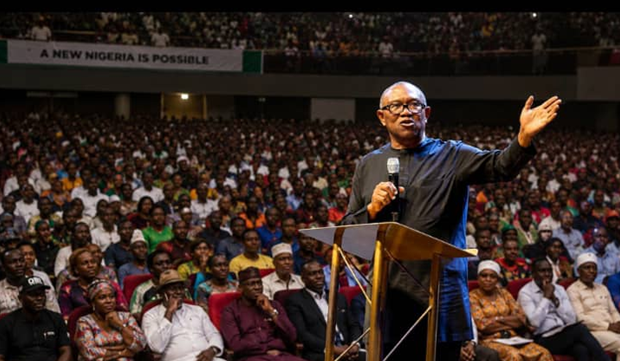
As Nigeria’s political landscape continues to evolve ahead of the 2027 general election, Labour Party presidential candidate in the 2023 election, Peter Obi, is increasingly being viewed by political observers as one of the strongest challengers to President Bola Ahmed Tinubu. While the incumbent retains the traditional advantages of office, analysts say Obi’s growing national appeal, reform-oriented message, and international profile have positioned him as a formidable opposition figure with a realistic path to the presidency.

Obi’s political standing has remained remarkably resilient since the 2023 presidential election, during which he built a nationwide support base that exceeded the expectations of many analysts. His campaign inspired millions of first-time voters, particularly young Nigerians, professionals, and urban residents, giving rise to the “Obidient” movement, one of the most significant grassroots political mobilizations in Nigeria’s democratic history.

Political analysts note that widespread public concern over inflation, unemployment, the rising cost of living, and insecurity could create an environment in which opposition candidates gain greater electoral traction. If these issues remain dominant in public discourse through 2027, Obi could be well positioned to capitalize on growing demands for economic reform and accountable governance.
Unlike many politicians who rely primarily on campaign rhetoric, Obi has consistently projected himself as a policy-driven leader. During his tenure as Governor of Anambra State, he earned a reputation among supporters for fiscal discipline, prudent management of public resources, and efforts to reduce government debt. His public engagements frequently emphasize economic productivity, industrial development, education, investment, job creation, and transparent governance.
Supporters also point to his reliance on data and economic indicators in public discussions, describing him as a politician who prioritizes evidence-based policymaking over populist slogans. They further cite his relatively modest personal lifestyle, accessibility to citizens, active engagement with young people and civil society, and consistent advocacy for education and institutional reforms as qualities that distinguish him within Nigeria’s political landscape.
These characteristics have helped reinforce Obi’s image as a reform-minded leader committed to accountability and responsible governance. Supporters argue that his emphasis on fiscal prudence, policy-based debates, and long-term economic planning represents a departure from politics centered on patronage, identity, and short-term promises.
Beyond Nigeria’s borders, Obi’s profile has grown significantly since the 2023 election. His campaign attracted international attention from major media organizations, policy institutions, universities, and members of the Nigerian diaspora. The Obidient movement became a notable subject of discussion among observers of African politics, highlighting the influence of youth participation in democratic processes.
Obi has also expanded his international visibility through appearances at universities, business schools, and global policy forums, where he has spoken on governance, economic transformation, education, and anti-corruption. His participation in executive education programmes at internationally respected institutions—including Harvard Business School, Saïd Business School, Cambridge Judge Business School, Kellogg School of Management, and the International Institute for Management Development—has further strengthened his professional network and exposure to global economic and governance practices.
In addition, Obi has cultivated relationships with international investors, business executives, academics, development organizations, and the Nigerian diaspora. He has consistently advocated policies aimed at attracting foreign investment, promoting trade, and encouraging skilled Nigerians abroad to contribute to national development.
Although Obi’s international recognition has increased substantially, particularly within African political circles and among the Nigerian diaspora, analysts note that his visibility should not be confused with formal diplomatic influence. While he is more widely recognized internationally than many Nigerian opposition politicians, there is no public evidence that he possesses the level of institutional international alliances typically associated with serving heads of state.
Despite his strengths, Obi faces significant political hurdles. Nigeria’s constitutional requirements demand not only a plurality of votes but also broad geographical support across the federation. Expanding his electoral appeal in northern Nigeria remains one of his most important strategic challenges. Equally significant is the need for greater opposition unity, as divisions among opposition leaders could fragment votes and benefit the incumbent.
Bola Tinubu continues to enjoy the advantages traditionally associated with incumbency, including greater visibility, established political structures, and access to an extensive nationwide political network. These factors ensure that the contest remains highly competitive.
Consequently, while Peter Obi cannot currently be described as the outright favorite to win the 2027 presidential election, political analysts generally regard him as one of the most credible challengers in the race. His prospects will likely depend on his ability to broaden his regional support, maintain the enthusiasm of his existing base, attract undecided voters, and navigate the complex dynamics of opposition cooperation. Other observers say otherwise citing reasons that the current APC government has nothing to show for to convince Nigerians to give them a second time.
With more than a year remaining before Nigerians head to the polls, the political landscape remains fluid. Alliances, policy debates, economic conditions, voter sentiment, and campaign strategies are all expected to play decisive roles in determining the country’s next president. For now, Peter Obi stands as one of the central figures shaping Nigeria’s political future, with a viable though far from guaranteed path to the nation’s highest office. Against all odds, Peter Obi’s candidacy still remains a strong pillar that is impossible to ignore by any anyone either living or dead if a free and fair election is organized.