Abia’s new campaign billboard levy sparks anxiety among opposition parties.
3 min read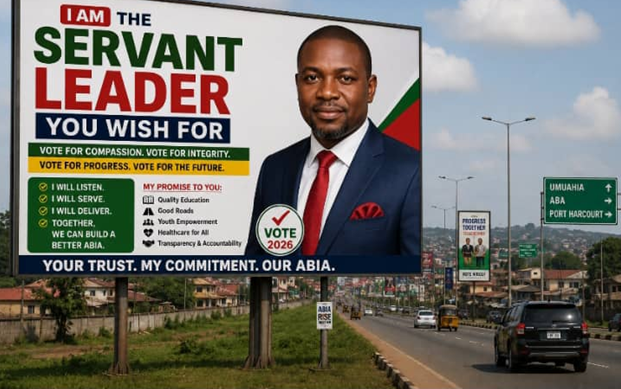
A wave of concern has swept through opposition political parties and aspirants in Abia State following the announcement of new campaign advertisement charges by the Abia State Structure for Signage and Advertisement Agency (ABSSAA), with many stakeholders warning that the fees could significantly alter the political landscape ahead of the 2027 general elections.

Several opposition politicians who attended the agency’s stakeholders’ engagement forum in Aba on Wednesday expressed apprehension over the scale of the charges, arguing that they could make political participation prohibitively expensive for smaller parties and less financially endowed candidates.
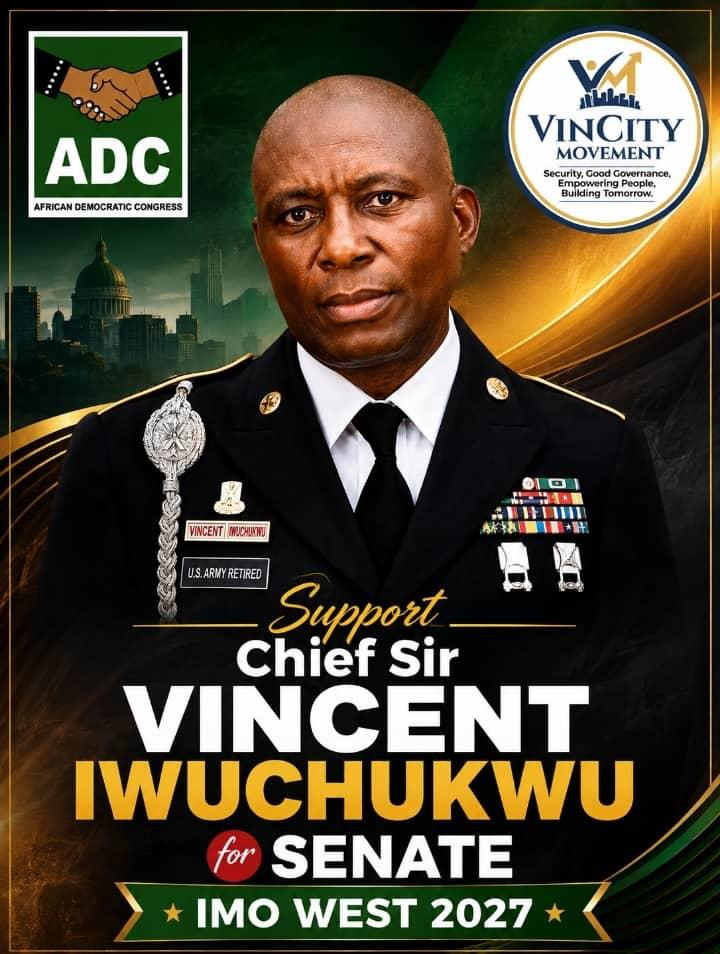
Under the new schedule unveiled by ABSSAA’s Director of Strategy and Innovation, NdubuisiNwogwugwu, presidential candidates intending to display campaign billboards across Abia State will pay ₦200 million, while governorship candidates will pay ₦150 million.
Senatorial candidates are expected to pay ₦100 million, House of Representatives candidates ₦50 million, and candidates seeking election into the Abia State House of Assembly ₦20 million.
According to the agency, the fees cover the entire electioneering period, while all campaign structures and billboards must conform to approved standards or risk removal if found to violate safety regulations or the agency’s guidelines.
ABSSAA also disclosed that House of Assembly candidates unable to meet the prescribed fee could share campaign billboard space with the governorship candidate of their political party.
The announcement immediately generated unease among opposition parties, many of which fear that the financial burden could weaken their visibility during campaigns and widen the advantage of larger, better-funded political parties.
Speaking during the engagement, the Abia State Chairman of the African Democratic Congress (ADC), Kalu Kalu, rejected the policy, arguing that the charges were inconsistent with the spirit of the Electoral Act.
He maintained that imposing such huge financial obligations on candidates could undermine the principles of fairness and equal political competition, especially where statutory campaign spending limits are prescribed by law.
Although the Abia State Government has defended the charges as regulatory fees for the use of public advertising infrastructure, critics insist that the policy risks becoming one of the defining political controversies ahead of the 2027 elections.
Political observers note that disputes over campaign billboard levies have repeatedly generated tension in Nigeria’s electoral history, with opposition parties often alleging that such measures disproportionately affect challengers, while governments have consistently maintained that they are simply enforcing existing signage and advertising laws.
From Umuaka Times investigations, one of the most notable examples of such levies occurred during the 2013 Anambra State governorship election, when the Anambra State Signage and Advertisement Agency (ANSAA), under the administration of then-Governor Peter Obi, insisted that governorship candidates obtain statutory permits before displaying campaign billboards.
The then APC candidate, Dr. Chris Ngige, accused the agency of targeting his campaign after several of his billboards were dismantled. His campaign described the action as politically motivated and alleged it was intended to frustrate the opposition.
ANSAA denied the allegation, stating that Ngige’s campaign had outstanding billboard permit fees of about ₦8.5 million, having allegedly paid only ₦2 million. The agency maintained that the removals were carried out strictly in accordance with the state’s signage regulations and applied equally to all political parties.
In reaction, Ngige’s media team disputed the agency’s position, insisting that the necessary payments had been made and accusing the state government of changing the rules during the campaign to the disadvantage of the APC candidate. The disagreement became one of the major controversies of the 2013 governorship election.
The issue resurfaced in subsequent election cycles. During the 2017 Anambra governorship election, opposition parties protested the enforcement of campaign poster and billboard charges estimated at about ₦9 million, describing them as excessive and capable of undermining democratic competition.
Similarly, during the 2022/2023 presidential election, the Labour Party and supporters of Peter Obi protested after campaign billboards were removed in Anambra over alleged non-compliance with ANSAA regulations. The agency maintained that it was enforcing the law and not targeting any political party or candidate.
Ahead of the 2025 Anambra governorship election, ANSAA again attracted nationwide attention after introducing a ₦50 million campaign permit fee for governorship candidates. Opposition parties criticized the levy as an attempt to discourage political participation, while the agency defended it as a lawful statutory charge applicable to every contestant without discrimination.
Against this backdrop, opposition politicians in Abia say they fear that the newly introduced billboard levies could become another contentious issue as preparations intensify for the 2027 elections, while the Abia State Government is expected to continue defending the policy as a legitimate regulatory measure rather than a political instrument.


