
Chidi Oguamanam: The extraordinary journey of an academic pundit.
5 min read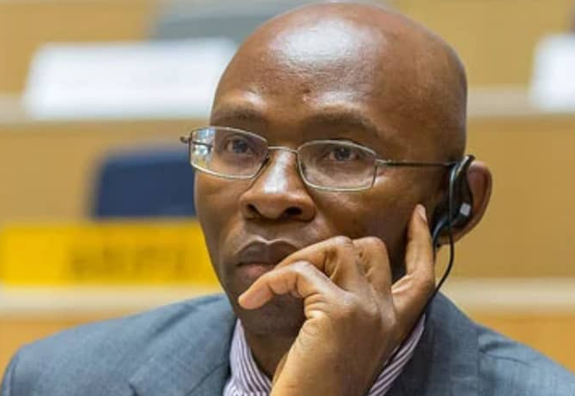
For a son of the soil from Imo State, it is one of those moments that make a community pause, look back and appreciate how far one of its own has travelled. A type of journey that a Nelson Mandela would describe as a Long Walk to Freedom. From the familiar soil of Umuaka in Njaba Local Government Area of Imo State to the lecture halls of some of the world’s most respected universities, and now to one of the United Nations’ most important global platforms on science, technology and ethics, Professor Chidi Oguamanam has built an academic career of remarkable distinction for himself and the society at large.

The latest chapter came in just last week in August 2026 when the distinguished Nigerian-Canadian scholar was appointed to the World Commission on the Ethics of Scientific Knowledge and Technology (COMEST) of the United Nations Educational, Scientific and Cultural Organization (UNESCO), for a four-year term from 2026 to 2029. The appointment was announced by the African Academy of Sciences and generated widespread interest across Nigeria and Africa.

For Umuaka, however, the story is bigger than an international appointment. It is the story of a man whose journey demonstrates what sustained education, intellectual discipline, professional integrity and an enduring commitment to knowledge can achieve.
Professor Oguamanam’s academic credentials tell part of the story; he obtained his LL.B. from the University of Ife, now Obafemi Awolowo University. He subsequently travelled to Canada for postgraduate studies at the University of British Columbia, where he earned an LL.M. in 2000 and a Ph.D. in Law in 2003. Before beginning his academic career, he practiced corporate and intellectual-property law in Nigeria, including at the prestigious law firm of Chris Ogunbanjo& Co., where he rose to become Acting Head of its Intellectual Property Unit.
Oguamanam was called to the Bar in both Nigeria and Canada, an achievement that reflects the unusual international character of his professional career. His transition from legal practice to scholarship would eventually take him into areas that have become increasingly important to the future of humanity: intellectual property, biotechnology, biodiversity, Indigenous knowledge, agriculture, food security, environmental sustainability, technology and the governance of scientific knowledge.
Professor Oguamanam began his academic career at Dalhousie University in Canada as a Fellow of the Canadian Institutes of Health Research Program in Health Law and Ethics of Health Research. He later joined Dalhousie’s Law School in 2004 and eventually became Director of its Law and Technology Institute, a position he held from 2007 to 2011. He also taught at Case Western Reserve University School of Law in Cleveland, Ohio, where he taught Indigenous Peoples, Indigenous Knowledge and International Law.
In 2011, he joined the University of Ottawa, where he is today a Full Professor in the Faculty of Law, Common Law Section. He is affiliated with the university’s Centre for Law, Technology and Society, Centre for Environment and Global Sustainability, and Centre for Health Law, Policy and Ethics. He is also a member of the International Law Group.At Ottawa, the amiable professor holds the prestigious University Research Chair in Sustainable Bio-Innovation, Indigenous Knowledge Systems and Global Knowledge Governance. He is also Director of Access and Benefit Sharing Canada and co-founder and co-director of the Open African Innovation Research (Open AIR) Network, an international research partnership examining innovation, intellectual property and knowledge governance in Africa.
The University of Ottawa describes his research as cutting across intellectual property, biotechnology, biodiversity, agriculture, food security, environmental law, health, Indigenous knowledge systems and global knowledge governance.Perhaps one of the most remarkable aspects of Professor Oguamanam’s scholarship is his effort to bring African and Indigenous knowledge systems into conversations traditionally dominated by Western scientific and legal institutions. One wonders how he will achieve this but his work examines how indigenous peoples and local communities can participate fairly in global knowledge production and share in the benefits arising from innovation.
The University of Ottawa has specifically highlighted his ability to draw on his African Indigenous heritage to connect the experiences of African communities with those of Indigenous communities in Canada and elsewhere.According to some documents Umuaka Times came across last week, Oguamanam has contributed to the work of the World Intellectual Property Organization (WIPO) and was among the global experts involved in negotiations that produced the 2024 WIPO Treaty on Intellectual Property, Genetic Resources and Associated Traditional Knowledge. In doing so, the Nigerian scholar has found himself participating in international conversations about who owns knowledge, who benefits from innovation and how traditional knowledge can be protected in an increasingly technological world.
Professor Oguamanam’s international recognition did not begin with UNESCO; in 2016, he was inducted into the Royal Society of Canada’s College of New Scholars, Artists and Scientists, one of Canada’s major recognitions for emerging scholarly excellence. In 2023, he and Professor Jeremy de Beer, his Open AIR colleague, received a Social Sciences and Humanities Research Council (SSHRC) Impact Award for their work with the Open African Innovation Research Network. The University of Ottawa records the recognition as an award for outstanding research, research training, knowledge mobilization and outreach.
The Umuaka born professor is also a Senior Fellow of the Centre for International Sustainable Development Law, and has held senior research fellowships and affiliations with institutions including the Centre for International Governance Innovation and the University of Cape Town’s Intellectual Property Unit.
In 2024, he was elected a Fellow of the African Academy of Sciences, placing him among a distinguished group of scholars recognized for their contributions to science and scholarship on the continent. And in 2026, his teaching excellence was again recognized by the University of Ottawa, where he was among the recipients of the Faculty of Law’s Excellence in Teaching Awards. His students and colleagues have recognized not only his scholarship but also his ability to communicate complex legal and intellectual questions in ways that engage and inspire students. It was against these remarkable backgrounds that UNESCO came last week calling and knocking on the big intellectual doors of Professor Chidi Oguamanam.
For Professor Oguamanam, the appointment represents a natural extension of a career spent asking difficult questions about the relationship between knowledge, technology, law, society and justice. The significance indeed extends beyond the geographical and political space of Nigeria, especially at a time when artificial intelligence, biotechnology and other emerging technologies are transforming societies at unprecedented speed. In practical terms, Umuaka Times gathered that questions about who controls technology, whose knowledge is recognized and who benefits from scientific advancement have seriously generated global concerns.
And sitting at that international table will now be a scholar whose intellectual journey was shaped, in part, by an African heritage. As one prominent scholar puts it, “The true measure of a professor is not how much they know, but how many minds they inspire to discover more.” UNESCO can now discover more from the professorial wisdom Chidi Oguamanam.