
Dolly Parton: The Farewell Song That Became Whitney Houston’s Global Hit.
6 min read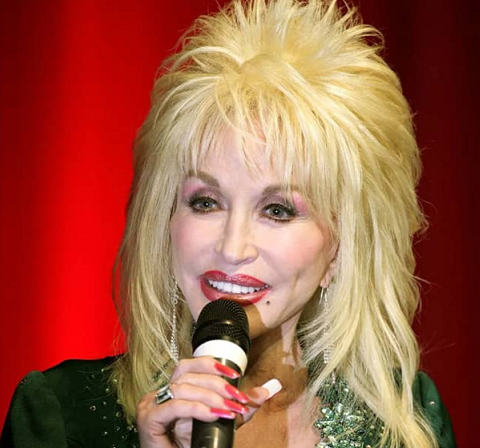
The story behind “I Will Always Love You,” one of the most famous songs in popular music history, began not as a romantic love song but as an emotional farewell between country music star Dolly Parton and the man who helped launch her career, Porter Wagoner. Decades later, the song would be transformed by Whitney Houston into a worldwide phenomenon after she recorded it for the 1992 film The Bodyguard. But behind Houston’s celebrated version was a story of professional separation, gratitude, business foresight and one of the most important copyright decisions of Parton’s career.

I Will Always Love You is a song born from a difficult goodbye which was very difficult to say; Dolly Parton joined The Porter Wagoner Show in 1967 after moving to Nashville to pursue her musical ambitions. Wagoner, already an established country music star and television personality, gave the young singer an important platform through which she reached a national audience. For approximately seven years, the two worked together, performing and recording music while Parton’s own reputation as a singer and songwriter continued to grow. But as her career developed, Parton increasingly wanted to establish herself as a solo performer.

Leaving Wagoner’s successful television program was not an easy decision. Wagoner was reportedly unhappy about losing his musical partner, and their disagreement created tension between them. Rather than allowing the situation to destroy their relationship, Parton chose to express her feelings through music, she therefore went home and wrote “I Will Always Love You.”
The song was her way of saying goodbye to Wagoner while expressing her gratitude for the opportunity he had given her. She wanted to move forward with her career, but she did not want that decision to erase the affection and respect she had for the man who had helped her.Parton later recalled that she wrote the song quickly. The following day, she took it to Wagoner and performed it for him. Umuaka Times gathered that the song reportedly moved Wagoner deeply. He recognized its quality and eventually agreed to let Parton leave the program. He also became involved in producing her recording of the song. Parton’s original version was released in 1974 and became a major country music success. Unknown to her, the song’s extraordinary journey was only beginning.
Before Whitney Houston ever recorded “I Will Always Love You,” another legendary performer wanted to record it; Elvis Presley. Parton was said to be excited by the prospect of Elvis recording one of her compositions. However, Elvis’s manager, Colonel Tom Parker, wanted a substantial portion of the song’s publishing rights reportedly about half. Parton refused.Although the decision was painful because she had admired Elvis and wanted him to record the song, she chose to retain ownership of her publishing rights. That decision would later prove enormously valuable.
Parton subsequently described “I Will Always Love You” as one of the most important copyrights in her publishing catalogue. Had she surrendered a substantial portion of the rights to the song, the financial consequences could have been enormous when Whitney Houston’s version later became a global hit.
From all indications, Parton’s original recording was successful in country music, the song later reached a different audience through another major singer, Linda Ronstadt. Her interpretation attracted attention outside the country music world and eventually played an important role in the song’s later journey to Hollywood.
Nearly two decades after Parton wrote the song, filmmakers searching for music for a major motion picture came across Ronstadt’s recording. In 1992, Whitney Houston was preparing to make her acting debut opposite Kevin Costner in The Bodyguard. The filmmakers needed a powerful song for the film’s soundtrack. The original plan was to use the Motown classic “What Becomes of the Brokenhearted.” However, the song had already been used in the 1991 film Fried Green Tomatoes, prompting the filmmakers to look for another option. Eventually, music supervisor, Maureen Crowe suggested “I Will Always Love You.”
Importantly, the version that attracted the filmmakers’ attention was Linda Ronstadt’s 1975 recording, rather than Parton’s original country version. Kevin Costner, who starred in The Bodyguard as Frank Farmer, Houston’s bodyguard, played an important role in the decision to use Parton’s song.Costner, who was also involved in the film’s production, believed the song would work particularly well for the emotional climax of the movie. He wanted Houston to record it in a way that would make the song unforgettable. Music producer David Foster was brought in to arrange the recording. Foster developed a new arrangement that would showcase Houston’s extraordinary voice while retaining the emotional power of Parton’s composition.
The filmmakers also needed Parton’s permission to use the song. Costner and his secretary contacted Parton, and the necessary arrangements were eventually made for the song to be used in the film. One of the most remarkable aspects of Houston’s recording was how dramatically it changed the character of the song. Parton’s original recording was essentially a country farewell a woman telling someone she cared about that she had to move on.
Houston’s version became a powerful romantic ballad associated with the emotional relationship between the characters in The Bodyguard. The recording begins with Houston singing almost entirely a cappella, allowing her voice to stand alone before the instrumentation gradually enters.The arrangement gave Houston room to demonstrate the extraordinary vocal power that made her one of the most celebrated singers of her generation. The result was unlike Parton’s original recording, yet the underlying composition remained Parton’s.
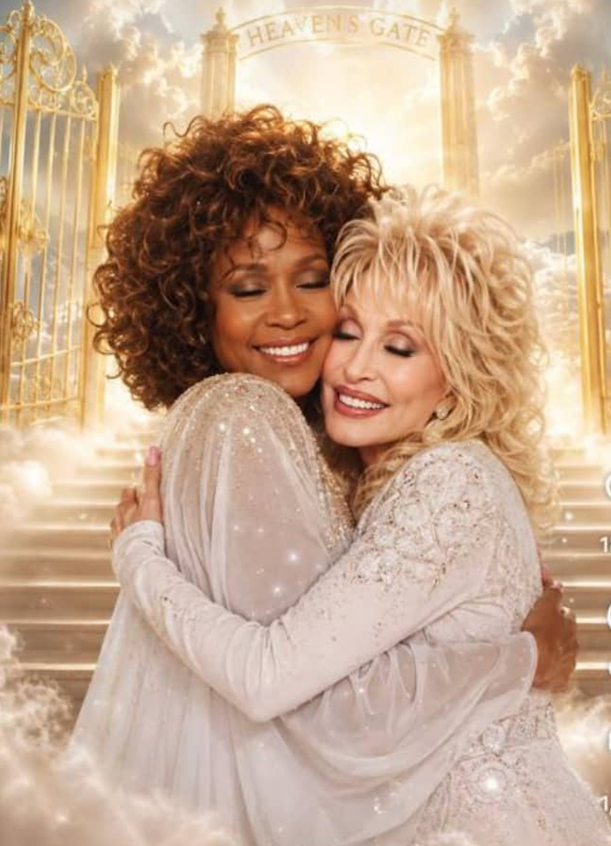
When Whitney Houston’s version was released in 1992, it became an international sensation. The recording spent 14 weeks at No. 1 on the Billboard Hot 100 and became one of the best-selling singles in music history. It also became closely associated with Houston’s career and introduced Dolly Parton’s songwriting to millions of listeners who might never have heard the original country recording.For many listeners around the world, “I Will Always Love You” became identified primarily with Whitney Houston. It was now that Parton died that many came to know that the song actually belonged to her and not Houston.
The success of Houston’s recording also produced an extraordinary financial reward for Parton. Because Parton had retained ownership of her songwriting and publishing rights, she was entitled to royalties generated by the use of her composition. The enormous commercial success of Houston’s recording therefore generated substantial income for Parton. This made her earlier refusal to surrender the rights to Elvis Presley’s management particularly significant.
The story became an important lesson in the value of songwriting ownership and intellectual property. Parton did not merely write a hit song; she retained control of the rights that made the song financially valuable.
The extraordinary history of “I Will Always Love You” also illustrates how the meaning of a song can change when it passes from one performer to another; for Dolly Parton, the song was a message to Porter Wagoner: She was leaving, but she remained grateful for what he had done for her. For Whitney Houston, the song became a dramatic declaration of love and emotional separation within The Bodyguard. The same words therefore came to represent two different kinds of goodbye. Parton’s was a professional farewell while Houston’s was presented as a romantic farewell. Yet both versions were built around the same central emotion—the pain of saying goodbye to someone who mattered deeply.
From Dolly Parton to Linda Ronstadt to Whitney Houston, the journey of the song can be traced through a remarkable chain of events: Dolly Parton wrote the song in 1973 Parton and recorded it in1974. Linda Ronstadt recorded her version in 1975. Filmmakers considered the song for The Bodyguard. Kevin Costner supported its use. David Foster created a new arrangement. Whitney Houston recorded it in 1992 and the recording became a worldwide phenomenon.
Few songs have travelled such a remarkable distance from their original meaning. What began as Dolly Parton’s private attempt to put a difficult goodbye into words eventually became one of the most recognizable songs in the world. It made Parton enormous amounts of money as a songwriter, elevated Whitney Houston’s international profile even further and became one of the defining songs associated with The Bodyguard.