Nnamdi Nwosu Iheme Holds Town Hall Meeting in Umuaka, Promises 40 Electric Buses for NINN
5 min read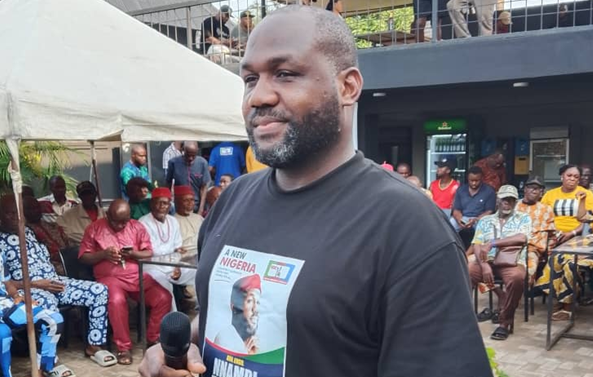
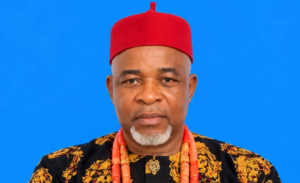
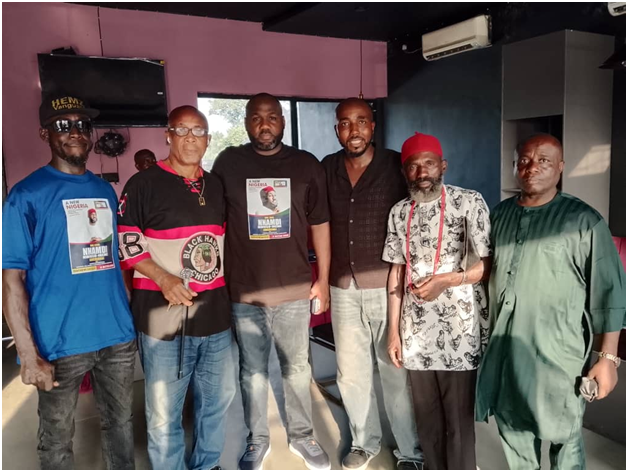
The Nigerian Democratic Congress (NDC) candidate for the Nkwerre, Isu, Njaba and Nwangele Federal Constituency, Engineer Nnamdi Nwosu Iheme, popularly known as Omereoha, has held a town hall meeting with the people of Umuaka and members of the NDC in the NINN community, promising a new approach to development if elected.The meeting, which took place on Wednesday, September 9, 2026, at the premises of Verse One Hotel and Bar along the Orlu-Owerri Road, Umuaka, attracted party members, supporters and other stakeholders, with some top officials of the NDC also in attendance.
Speaking at the event, Hon. Obinna Orgazi, popularly known as Brainbox, welcomed participants and appealed to them to work tirelessly for the success of NDC candidates at all levels within the NINN communities and beyond. Orgazi said the NDC was coming with what he described as a new agenda to “clean up Nigeria” and move the country from a consumption-based economy to an economy driven by production.
Addressing the gathering, Engineer Nnamdi Nwosu Iheme said he was delighted to be among the people of Umuaka and appealed for their support for his candidacy and those of other NDC candidates in Orlu Zone. He also urged the people to support the presidential ambition of His Excellency Peter Gregory Obi, whom he identified as the NDC candiate for the presidency of the Federal Republic of Nigeria.Iheme, who presented himself as a young professional with a strong interest in transforming the NINN Federal Constituency, outlined some of the programs he said he would pursue if elected. One of his major promises was the provision of 40 electric shuttle buses to serve communities across the NINN Federal Constituency. According to him, the buses would be provided free of charge as part of an effort to improve transportation and reduce the burden of movement on residents.
He also promised to introduce skills acquisition programs aimed at empowering young people and other residents with practical skills that could enable them to become economically independent. On education, Iheme said he would work towards bridging the gap between public and private schools and transforming the educational system in the constituency through greater emphasis on science and technology. He further appealed to NDC leaders and stakeholders to begin preparations for extensive grassroots mobilization, including door-to-door campaigns, once the official campaign period begins.At the conclusion of the meeting, Iheme donated N1 million to support the activities of the NDC in Umuaka. The donation and his presentation attracted enthusiastic reactions from many of those present, with some participants describing the young politician as “a new wine in a new bottle,” in reference to what they regarded as a different approach to politics and leadership in the entire NINN community.
The town hall meeting comes at a time when the four local government areas making up the NINN Umuaka are facing serious socio-economic problems and beyond. Umuaka Times however went further to establish the problems facing NINN.According to the findings made by the newspaper, the Federal Constituency known as Nkwerre, Isu, Njaba and Nwangele continues to face a number of development challenges. While successive governments and elected representatives have implemented various projects in the constituency, the condition of infrastructure remains uneven, particularly in rural and inter-community areas. For residents, the most important question is increasingly not simply how many projects have been announced or commissioned, but how many are functioning and making a meaningful difference in people’s daily lives.
Road infrastructure remains one of the most visible problems confronting communities across the NINN constituency. Umuaka Times gathered that there have been government interventions on major roads within the wider Orlu Zone, including road rehabilitation and erosion-control projects. However, the situation on many rural and inter-community roads remains considerably different. While major highways may receive attention, many residents continue to contend with deteriorating village roads, damaged access roads, failed drainage systems and roads affected by erosion.
For farmers, traders, students, workers and patients travelling to health facilities, the condition of these roads has direct consequences on their economic and social activities. A serious development program for NINN would therefore need to look beyond major highways and address the network of roads connecting autonomous communities, villages and rural settlements.
Electricity remains another major concern seriously affecting NINN. Although there have been rural electrification programs and the installation of solar street lights in parts of the constituency, the availability and reliability of electricity remain important issues for residents and businesses. Former House of Representatives member Rt. Hon. Jones Onyereri had previously told Umuaka Times that more than 1,000 solar street lights were facilitated across the federal constituency during his tenure, with installations reported in communities in Nkwerre, Nwangele, Isu and Njaba. But the real test for residents today is whether such infrastructure remains functional. For NINN communities seeking economic development, Umuaka Times observed that reliable electricity is crucial to small businesses, workshops, schools, healthcare facilities, ICT centres and other enterprises.
Access to reliable and safe water remains another challenge for the NINN residents. Boreholes and other community water projects have been provided in different locations over the years, but many communities continue to depend on boreholes, wells, streams and other sources developed by individuals. Onyereri had also previously told Umuaka Times that boreholes were provided in Umuchoke Village, Amaigbo; Umuokpara Autonomous Community, Abba; Umunaga Village, Nkwerre; and Amiyi Autonomous Community, Njaba. The critical question, however, is whether such facilities remain functional.For a constituency seeking sustainable development, access to potable water cannot be treated as an occasional political project. Communities need reliable water infrastructure that can serve households, schools, healthcare facilities and businesses throughout the year.
Education is another area requiring attention. Government-owned primary and secondary schools are spread across the four LGAs, but the condition of individual schools varies. Some schools require attention to classroom buildings, roofs, desks, toilets, laboratories, libraries, teachers’ facilities, water supply, electricity and ICT infrastructure.
This makes Iheme’s promise to improve the relationship between public and private education and introduce stronger science and technology programs particularly significant. For such a promise to become reality, however, investment would need to go beyond the provision of equipment. It would require properly maintained classrooms, qualified teachers, laboratories, electricity, internet connectivity and an environment capable of preparing young people for a modern economy.
Healthcare is another area where the NINN communities face challenges. The four LGAs have primary health centres and other public health facilities, but the existence of a health centre does not necessarily mean that residents have access to effective healthcare because most of them do not function. Questions about personnel, medicines, equipment, beds, laboratories, maternity services, electricity, water and emergency transportation remain important.
A new representative would have to confront the difficult task of identifying what is working, what has deteriorated, what is completely absent and what requires urgent intervention. For the people of Nkwerre, Isu, Njaba and Nwangele, the ultimate measure of political representation will not be the number of campaign meetings held or promises made.It will be whether their roads become passable, electricity becomes more reliable, water becomes accessible, schools become better equipped, health facilities become functional and young people acquire skills and opportunities that enable them to build sustainable livelihoods.
The town hall meeting in Umuaka has therefore placed Engineer Nnamdi Nwosu Iheme’s promises before the electorate. The coming political campaign will determine how those promises are received by voters; ultimately, however, the people will judge whichever representative emerges by the tangible changes experienced across the NINN communities.