1975 Central School Umuaka Class Photograph Emerges as Priceless Historical Archive.
4 min read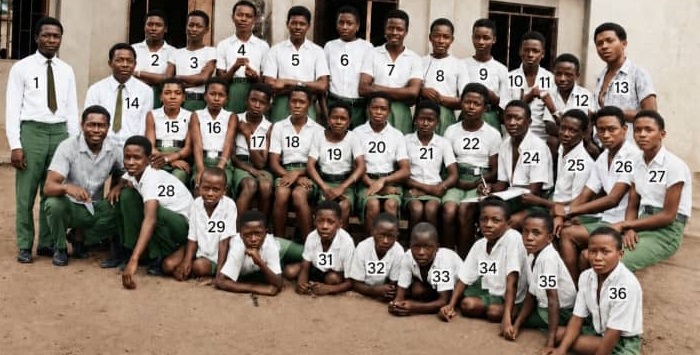
A unique class photograph taken at Central School Umuaka, during the 1974/1975 academic session has resurfaced as a priceless historical archive. The image offers a rare visual record of school life in post-war Eastern Nigeria and preserves the memories of a generation that returned to the classroom after the Nigerian Civil War. The black-and-white photograph was made available to Umuaka Times by United States-based Umuaka indigene Mr. Tim Nganwuchu, who also appears in the picture. The photograph captures the school’s Elementary Six pupils posing with their class teacher at the close of the academic year. What seemed an ordinary class photograph more than five decades ago has today become an invaluable record of Umuaka’s educational, social and family history.As the photograph has circulated among former pupils and members of the Umuaka community and beyond, additional identifications have continued to emerge. Based on the latest information received by Umuaka Times, the following pupils have now been identified: No. 3 – Ngozi (Ekwe); No. 4 – Celestina Onyemepu; No. 5 – Evelyn Okechukwu; No. 6 – Catherine Ngawuchi; No. 7 – Apollonia Duru; No. 8 – BenedictEbeleukwu; No. 9 – Catherine Mmeremukwu; No. 10 – Unidentified; Nos. 11/12 – Augustine Ughabugo; No. 13 – Unidentified; No. 14 – Mr. Osuagwu (Class Teacher); No. 15 – Felicia ConceptaMbama; No. 16 – Margaret AlacoqueMbama; No. 17 – Elizabeth Onwukwe; No. 18 – Unidentified; No. 19 – Matilda Ukanu; No. 20 – DorothyOsu; No. 21 – EuchariaOhanekwu; No. 22 – Beatrice (from Achara); No. 24 – unidentified. No. 25 – Alfred Duru; No. 26 – Sunday Ojinnaka; No. 27 – TidulaAmadi; No. 28 – C.C. (Achara); No. 29 – Samuel Nnawuihe; No. 30 – Sunday “Sonex” Oguike (whose number is not visible in the photograph); No. 31 – Denise Ugwogbu; No. 32 – Jude Onyeobuchi; No. 33 – A relative of FatherOnyebuchi (full identity yet to be confirmed); No. 34 – Timothy Nganwuchu; No. 35 – EmekaOnyejiekwe; and No. 36 – Simon Obioma.

These identifications, however, remain the subject of further verifications as it has taken so lomg and faces have prominently changed. For example, some former classmates have identified No. 24 as Emma Owowo (Cato) rather than Chreewowo, while others have suggested that No. 34 is Tim Nwanwuchi instead of Timothy Ngawuchi, and that No. 35 is Emeka Onyejekwe rather than Jude Onyejiekwe. Likewise, Augustine Ughabugo has been identified by some former pupils as Nos. 11/12, while others believe he appears as No. 37. These differences are being carefully reviewed.To preserve the historical integrity of the archive, Umuaka Times will continue to verify every identification through independent confirmation from multiple former classmates and, where possible, by reference to the original numbered photograph. Only names that can be satisfactorily corroborated will be regarded as confirmed. This editorial approach is intended to ensure that the photograph becomes an accurate historical record for future generations rather than simply a collection of individual recollections.

Former pupils recalled that, instead of using their available funds to “vote to cook rice” — a popular expression at the time for spending money on food — they chose to have a class photograph taken. More than fifty years later, that decision has become one of the most enduring acts of historical preservation undertaken by the class.
The photograph was taken only five years after the end of the Nigerian Civil War, when communities throughout the former Eastern Region were still rebuilding their lives. Schools had reopened, but many families continued to face severe economic hardship as they recovered from the devastating effects of the war. One striking feature of the photograph is that several pupils appear older than would ordinarily be expected in an elementary six classroom. This reflects the educational disruption caused by the war, which forced many children to suspend their schooling before eventually returning to complete their education after peace was restored.
Today, more than half a century later, many former classmates acknowledge that they now struggle to recognize one another. Yet the photograph remains an extraordinary record of a generation that endured hardship, resumed its education against enormous odds and later established itself in professions, businesses and communities across Nigeria and the diaspora.Beyond its sentimental significance, the photograph serves as an important historical document. It preserves details of school uniforms, hairstyles, classroom culture and educational life in rural Imo State during the mid-1970s. It also provides an invaluable family archive, enabling children and grandchildren to glimpse the early lives of their parents and grandparents while offering historians, genealogists and researchers a rare primary source on post-war education in Eastern Nigeria.
As efforts to identify every pupil continue, Umuaka Times invites members of the 1974/1975 Elementary Six class at Central School Umuaka, their families and other members of the public to contribute additional information. Every confirmed identification strengthens the historical value of the photograph and helps preserve the collective educational heritage of Umuaka for generations yet unborn.