Nigerians react as South African politician’s remarks on deportation spark outrage.
5 min read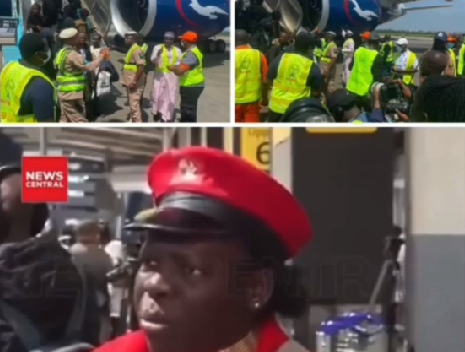
The social media has been on fire from last week as a South African political figure, Thabile Sibeko, came under intense criticisms from Nigerians at home and abroad following the controversial remarks she made in the aftermath of the recent evacuation of Nigerians from South Africa amid renewed xenophobic tensions. Sibeko, who is reported to be the president of the Inizwe Nathi Party, made the comments during an interview with News Central, a Nigerian 24-hour television channel. While initially acknowledging the contributions Nigerians have made to South Africa, she quickly launched into a scathing attack on the West African nation’s citizens.

“We did not appreciate the wrongs you have done in our country,” Sibeko stated, before accusing Nigerians of being responsible for widespread social problems in South Africa.

In one of her most controversial claims, Sibeko alleged that South African streets are now populated by “zombies” because of Nigerians, whom she accused of introducing drugs into communities and destroying the lives of young people. She further claimed that Nigerians had “messed up” the country and advised them to conduct themselves differently in other nations they may visit.
Concluding her remarks, she described Nigerians as “horrible” people and expressed the hope that they would never return to South Africa. The comments quickly generated widespread reactions among Nigerians, particularly those who have lived or worked in South Africa.
Reacting from his United States base, a Nigerian named K.C. Ojinnaka offered a measured but critical assessment. According to him, granted that Sibeko’s comments were harsh, Nigerians should not ignore legitimate concerns surrounding criminal activities involving some of their compatriots.
“What the woman is saying, we are not seeing it with our eyes open. Most villages now are full of drugs because that is the only thing our people were selling, so they are bringing it home,” he stated.
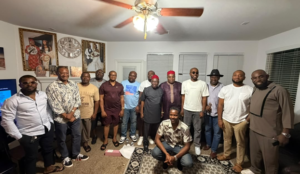
Youth politician Obinna Orgazi echoed the call for self-examination during a discussion held at the Umuaka Times Institute (UTI) last week.
“We can batter South Africans all we may, but we need serious introspection on our conducts,” Orgazi said.

Prominent legal practitioner in Diaspora, Chief Johnson Anyiam raised questions about the circumstances surrounding the evacuation exercise.
“Isn’t it ironic the so-called drug dealers couldn’t afford to buy their own flight tickets? You need not live in South Africa to get the answer to your question. The answer is in that video of people who couldn’t wait to jump into a free ride back to Nigeria,” he remarked.
However, several respondents strongly rejected Sibeko’s allegations. Sir Sydney Okpoko described the South African politician’s comments as irresponsible and unfair.
“She is a total disgrace to humanity, let alone to be called a woman. We can go check the status of this woman; she’s not from South Africa. If her child ended his or her life with drugs, she cannot put the blame on Nigerians. Her fellow South Africans are the ones making their children become those zombies in those shacks they are living in and not Nigerians,” he said.
Okpoko further argued that some South Africans view Nigerians as successful competitors and resent their achievements.
Another commentator, Mr. Tochukwu Egeonu, attributed the hostility toward foreigners to deeper societal issues.
“The issue at play in South Africans’ demand for foreigners to leave their shores is ignorance and inferiority complex. They prefer variable entitlements to the whites instead of fellow Africans. Mental slavery and self-hate are really at play,” Egeonu stated.
He compared the situation to ethnic tensions occasionally witnessed within Nigeria, particularly between some Yoruba and Igbo communities.
A contributor identified as Bentigas also criticized Sibeko’s claims saying:
“It is a shame to the people of South Africa. Before Nigerians came to South Africa, South Africans had already known what drugs were. Why label Nigerians as those who corrupted your children? She is saying trash,” he said.
Nigerian Diasporan educationist, Chinonye Onyeari offered a more balanced perspective, arguing that Nigerians are often unfairly stereotyped.
“Within the shores of Nigeria, an Igbo man that makes money is seen as a ritualist by non-Igbo people, and outside the shores of Nigeria, he is seen as a drug dealer. The fact remains that drug cartels are South Africans and the provincial police commissioner has made it clear to the public. This is not to say that some Nigerians in South Africa do not sell drugs, but not as exaggerated. In locations where black South Africans live, in every ten houses, drugs are sold in one. Also, every taxi rank is home to drug dealing. The international media conspiracy against Nigerians is continuously encouraging people to maintain the narrative that Nigerians sell drugs,” he wrote.
Returning to the debate, Orgazi stressed the need for balance and self-reflection.
“While there is truth in that perspective, it is not the only lens through which this issue should be viewed. South Africa carries the burden of a painful recent history and continues to grapple with the social and economic consequences of that past.
“There are countless hardworking, law-abiding Nigerians contributing positively to South African society. However, we must also acknowledge that the actions of a few among us have, at times, created discomfort and resentment within host communities.
“When concerns about Nigerians emerge not only in South Africa, but also in Ghana, Cambodia and other countries, it is worth asking ourselves a difficult but necessary question: Are we paying enough attention to the pattern?
“This is not a moment for defensiveness or blame. It is a moment for honest introspection, self-correction and a renewed commitment to being worthy ambassadors wherever we find ourselves. The reputation of millions is often shaped by the conduct of a few, and that reality demands our collective reflection.”
The controversy comes in the wake of a Federal Government-backed evacuation exercise that saw hundreds of Nigerians return home from South Africa following reports of renewed xenophobic threats and intimidation.
Umuaka Times correspondents in South Africa confirmed that the first Air Peace evacuation flight arrived at the Murtala Muhammed International Airport in Lagos on Thursday 11 June 2026 in the morning hours with 258 Nigerians on board. The returnees cited discrimination, insecurity, extortion and xenophobic attacks as reasons for leaving South Africa. Nigerian authorities indicated that additional evacuation flights are planned as more citizens express interest in returning home.
South African President Cyril Ramaphosa has since stated that his government does not support anti-foreigner protests and distanced his administration from calls demanding the expulsion of foreign nationals from the country.
As debates continue over Sibeko’s remarks, the incident has once again highlighted the complex relationship between South Africans and African migrants, particularly Nigerians, as both countries grapple with issues of migration, economic competition and social integration.